Ohio Car Accident Lawyer

Car accidents happen every day across Ohio’s busy highways, rural roads, and city streets. From congestion in Columbus and Cleveland to high-speed crashes on I-70 and I-75, Ohio drivers face a real risk of serious injury and financial loss when another motorist acts negligently. Understanding Ohio car accident laws is critical if you or a loved one has been injured, because the rules governing fault, insurance, deadlines, and compensation directly impact your ability to recover damages - that's why you need an Ohio car accident lawyer.

Car accidents happen every day across Ohio’s busy highways, rural roads, and city streets. From congestion in Columbus and Cleveland to high-speed crashes on I-70 and I-75, Ohio drivers face a real risk of serious injury and financial loss when another motorist acts negligently. Understanding Ohio car accident laws is critical if you or a loved one has been injured, because the rules governing fault, insurance, deadlines, and compensation directly impact your ability to recover damages – that’s why you need an Ohio car accident lawyer.

Below is a comprehensive, Ohio-specific guide to car accident laws, liability, injuries, compensation, and what to do after a crash—written to help accident victims protect their rights and pursue full financial recovery.


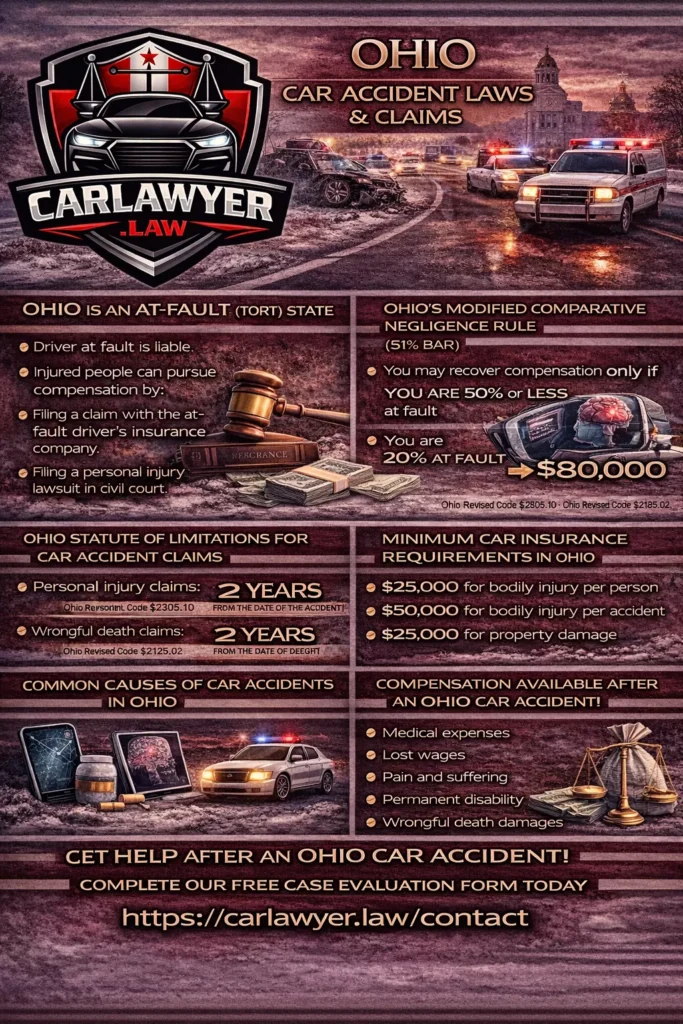
Ohio “Infographic explaining state-specific car accident laws, including statute of limitations, fault rules, common causes of car crashes, typical injuries, and available compensation, featuring the CarLawyer.Law logo with a car and justice scales.

Ohio Is an At-Fault (Tort) State for Car Accidents

Ohio follows an at-fault insurance system, also known as a tort-based system. This means the driver who caused the accident is financially responsible for the injuries and damages they cause.

After a car accident in Ohio, an injured person may pursue compensation by:

  • Filing a claim with the at-fault driver’s insurance company
  • Filing a claim with their own insurer (for certain coverages)
  • Filing a personal injury lawsuit in civil court

Because Ohio is not a no-fault state, accident victims are not limited to their own insurance and can pursue claims directly against negligent drivers.


Ohio’s Modified Comparative Negligence Rule (51% Bar)

Ohio uses a modified comparative negligence system with a 51% bar rule. This law determines how fault is shared when more than one party contributes to an accident.

Under Ohio Revised Code §2315.33:

  • You may recover compensation only if you are 50% or less at fault
  • If you are 51% or more at fault, you are barred from recovering damages
  • Your compensation is reduced by your percentage of fault

Example:
If you are awarded $100,000 in damages but found 20% at fault, your recovery is reduced to $80,000. If you are found 51% at fault, you recover nothing.

This makes evidence, accident reconstruction, and legal advocacy especially important in Ohio car accident cases.


Ohio Statute of Limitations for Car Accidents

Strict deadlines apply to car accident claims in Ohio. Missing these deadlines can permanently bar your case.

Personal Injury Claims

  • 2 years from the date of the accident
    (Ohio Revised Code §2305.10)

Wrongful Death Claims

  • 2 years from the date of death
    (Ohio Revised Code §2125.02)

Property Damage Claims

  • Generally 2 years, though insurance claims may have shorter contractual deadlines

Because evidence can disappear quickly and insurers begin building defenses immediately, it is critical to act well before the statute of limitations expires.


Minimum Car Insurance Requirements in Ohio

Ohio drivers are required to carry minimum liability insurance coverage, including:

  • $25,000 for bodily injury per person
  • $50,000 for bodily injury per accident
  • $25,000 for property damage

While these limits satisfy legal requirements, they are often insufficient to cover serious injuries, which is why uninsured/underinsured motorist coverage can be critical in Ohio car accident claims.


Major Ohio Highways and High-Risk Crash Corridors

Ohio’s extensive highway system contributes to a high number of serious car accidents each year. Some of the most dangerous roadways include:

  • Interstate 70 (I-70) – Major east-west corridor through Columbus and Dayton
  • Interstate 75 (I-75) – Heavy truck and commuter traffic through Toledo, Dayton, and Cincinnati
  • Interstate 71 (I-71) – High-speed crashes between Cleveland, Columbus, and Cincinnati
  • Interstate 90 (I-90) – Congested urban traffic near Cleveland
  • U.S. Route 23 & Route 33 – High-speed rural and suburban crashes

Winter weather, construction zones, and heavy commuter traffic significantly increase accident risk across Ohio.


Common Causes of Car Accidents in Ohio

Car accidents in Ohio are most often caused by preventable driver behavior, including:

Distracted Driving

Texting, using GPS, eating, and in-car technology divert drivers’ attention from the road.

Speeding

Excessive speed is a leading cause of severe and fatal crashes, especially on highways and rural roads.

Drunk or Drug-Impaired Driving

Alcohol and drug impairment continue to contribute to serious and deadly crashes throughout Ohio.

Failure to Yield

Intersection accidents frequently occur when drivers fail to yield the right of way.

Reckless or Aggressive Driving

Tailgating, unsafe lane changes, and road rage behaviors dramatically increase crash severity.

Weather-Related Negligence

Snow, ice, fog, and rain require reduced speed and increased caution—drivers who fail to adjust may still be held liable.


Common Injuries in Ohio Car Accidents

Car accidents often result in injuries that require extensive medical treatment and long-term recovery, including:

Even injuries that appear minor at first can worsen over time, making prompt medical evaluation essential.


Compensation Available in Ohio Car Accident Claims

Ohio car accident victims may be entitled to compensation for both economic and non-economic damages, including:

Economic Damages

Non-Economic Damages

  • Pain and suffering
  • Emotional distress
  • Loss of enjoyment of life
  • Permanent disability or disfigurement

Wrongful Death Damages

In fatal accidents, surviving family members may recover:

  • Funeral and burial expenses
  • Loss of financial support
  • Loss of companionship and care
  • Mental anguish

Ohio does not cap economic damages in car accident cases, though certain caps may apply to non-economic damages depending on injury severity.


What to Do After a Car Accident in Ohio

Taking the right steps after a car accident can protect your health and your legal claim:

  1. Call 911 and report the accident
  2. Seek immediate medical attention
  3. Document the scene with photos and videos
  4. Collect witness contact information
  5. Obtain a copy of the police report
  6. Avoid giving recorded statements to insurers
  7. Consult a car accident lawyer before accepting any settlement

Insurance companies often attempt to minimize payouts—early legal guidance can make a significant difference.


Why Ohio Car Accident Claims Can Be Complex

Ohio car accident cases often involve:

  • Disputes over fault percentages
  • Low insurance policy limits
  • Uninsured or underinsured drivers
  • Pre-existing medical conditions
  • Long-term or permanent injuries

Because your compensation can be reduced or denied based on fault, working with experienced legal counsel is often critical to protecting your claim.


Speak With an Ohio Car Accident Lawyer Today

If you were injured in an Ohio car accident, you do not have to face insurance companies alone. A qualified car accident lawyer can investigate the crash, gather evidence, calculate damages, and fight for the full compensation you deserve.

Take the first step today by completing our
free case evaluation form.

Your consultation is confidential, and there is no obligation.


Sources

  1. Ohio Revised Code §2305.10 – Statute of Limitations for Bodily Injury
    https://codes.ohio.gov/ohio-revised-code/section-2305.10
  2. Ohio Revised Code §2315.33 – Comparative Negligence Law
    https://codes.ohio.gov/ohio-revised-code/section-2315.33
  3. Ohio Department of Insurance – Auto Insurance Requirements
    https://insurance.ohio.gov/wps/portal/gov/odi/consumer/auto/auto-insurance