California Car Accident Lawyer

California has some of the busiest roadways in the United States, with millions of drivers sharing highways with commercial trucks, delivery vehicles, and rideshare drivers every day. From congested urban freeways in Los Angeles to high-speed trucking corridors through the Central Valley, car accidents in California frequently result in serious injuries and complex liability disputes. If you’ve been injured in a crash, understanding California car accident laws, filing deadlines, and your compensation rights is critical - that's why you should hire a California car accident lawyer.

California has some of the busiest roadways in the United States, with millions of drivers sharing highways with commercial trucks, delivery vehicles, and rideshare drivers every day. From congested urban freeways in Los Angeles to high-speed trucking corridors through the Central Valley, car accidents in California frequently result in serious injuries and complex liability disputes. If you’ve been injured in a crash, understanding California car accident laws, filing deadlines, and your compensation rights is critical – that’s why you should hire a California car accident lawyer.

At CarLawyer.Law, we focus exclusively on representing car accident victims. This page explains everything California drivers need to know after a crash, including fault rules, statutes of limitations, major trucking corridors, common injuries, and the types of compensation available under California law.


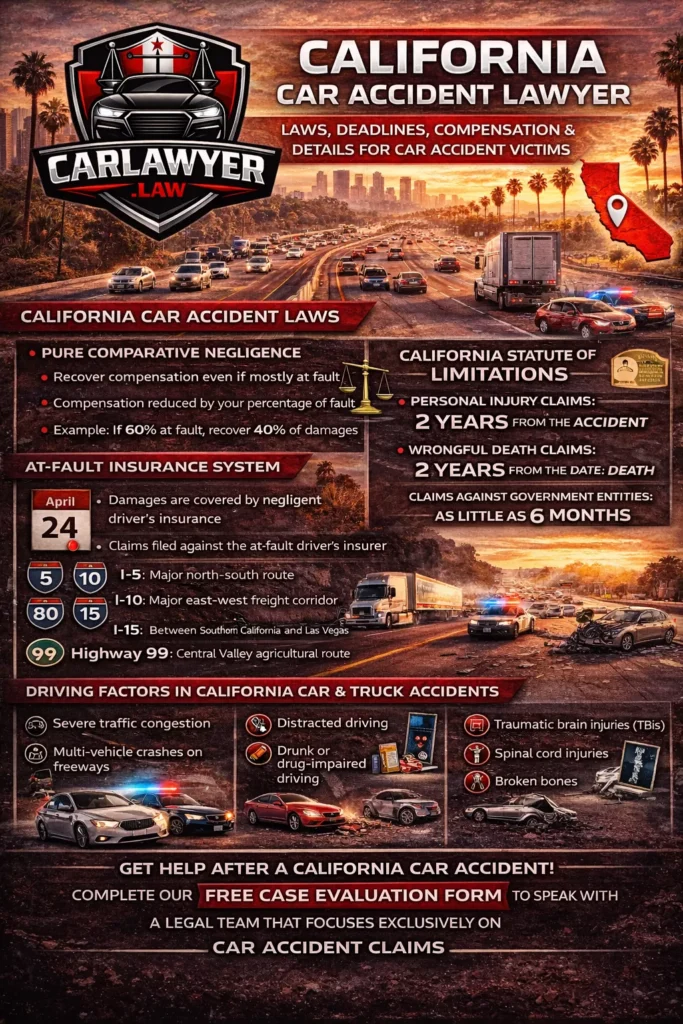
Infographic for CarLawyer.Law titled “California Car Accident Lawyer” featuring the CarLawyer.Law logo and a California freeway background with heavy traffic and palm trees. The infographic explains California car accident laws, including pure comparative negligence and the at-fault insurance system, the two-year statute of limitations for personal injury and wrongful death claims and shorter deadlines for claims against government entities, major trucking corridors such as I-5, I-10, I-15, I-80, and Highway 99, common causes of car and truck accidents, serious injuries sustained in crashes, available compensation for victims, and a call to action to complete a free case evaluation form at CarLawyer.Law.

California Car Accident Laws

California follows a fault-based system with comparative negligence rules that strongly influence how compensation is awarded.

Pure Comparative Negligence

California uses a pure comparative negligence system. This means:

  • You can recover compensation even if you are mostly at fault
  • Your total compensation is reduced by your percentage of fault
  • Example: If you are 60% at fault, you can still recover 40% of your damages

This system allows injured victims to pursue compensation in complex, multi-vehicle crashes where fault is shared among several parties.

At-Fault Insurance System

California is an at-fault state, meaning:

  • The driver who caused the accident is financially responsible
  • Claims are filed against the at-fault driver’s insurance company
  • Lawsuits may be necessary if insurers deny or undervalue claims

California’s fault system often leads to aggressive insurance investigations and disputes over liability percentages.

Minimum Insurance Requirements

California requires drivers to carry minimum liability coverage of:

  • $15,000 for bodily injury per person
  • $30,000 for bodily injury per accident
  • $5,000 for property damage

These minimums are often insufficient in serious injury cases, making uninsured and underinsured motorist claims especially important.


California Statute of Limitations for Car Accidents

California law strictly limits how long accident victims have to take legal action.

  • Personal injury claims: 2 years from the date of the accident
  • Wrongful death claims: 2 years from the date of death
  • Claims against government entities: Often as little as 6 months

Missing the statute of limitations can permanently bar your claim, regardless of fault or injury severity.


Major Trucking Corridors & Highways in California

California is a national transportation and logistics hub, with heavy commercial truck traffic moving goods between ports, agricultural regions, and major cities.

Major trucking corridors include:

  • Interstate 5 (I-5): Runs north–south through the entire state
  • Interstate 10 (I-10): Major east–west freight route through Southern California
  • Interstate 80 (I-80): Connects the Bay Area to Nevada and beyond
  • Interstate 15 (I-15): Heavy commercial traffic between Southern California and Las Vegas
  • Highway 99: Central Valley agricultural trucking corridor

Car accidents involving large commercial trucks on these highways often result in catastrophic injuries due to speed, traffic density, and vehicle size disparities.


What’s Unique About Car & Truck Accidents in California

California car accident cases often involve factors that are less common in other states, including:

  • Severe traffic congestion in metro areas
  • Multi-vehicle pileups on freeways
  • High volume of commercial delivery vehicles
  • Rideshare-related accidents (Uber, Lyft)
  • Agricultural trucking in rural regions
  • Mountain passes and wildfire-related road hazards

These factors can complicate liability and increase the severity of injuries.


Common Causes of Car Accidents in California

Car accidents across California are frequently caused by:

California consistently ranks among the states with the highest number of distracted driving and impaired driving crashes.


Common Car Accident Injuries

Due to traffic volume and high-speed travel, California car accidents often result in serious injuries, including:

Many victims require extensive medical treatment, long-term rehabilitation, and ongoing care.


Compensation Available to California Car Accident Victims

Depending on the circumstances of the accident, injured victims may be entitled to compensation for:

Economic Damages

Non-Economic Damages

Wrongful Death Damages

  • Funeral and burial expenses
  • Loss of financial support
  • Loss of companionship and care

California does not cap compensatory damages in most car accident cases, making thorough claim evaluation critical.


Why California Car Accident Claims Are So Complex

Insurance companies in California often:

  • Dispute fault percentages
  • Minimize injury severity
  • Delay claims to pressure settlements
  • Use surveillance and social media monitoring
  • Undervalue long-term medical needs

When commercial trucks or rideshare vehicles are involved, additional insurance policies and corporate defenses often apply.


Why You Should Not Handle a California Car Accident Claim Alone

Without legal guidance, accident victims risk:

  • Accepting low settlement offers
  • Missing critical deadlines
  • Underestimating future medical costs
  • Being unfairly assigned fault

A lawyer familiar with California car accident laws and insurance tactics can protect your rights and pursue the full compensation you deserve.


Get Help After a California Car Accident

If you or a loved one has been injured in a California car accident, taking action early can make a significant difference in the outcome of your case. Evidence disappears quickly, and insurance companies move fast to protect their bottom line.

Complete our free case evaluation form today to discuss your case with a legal team that focuses exclusively on car accident cases.


Authoritative Sources & References

  1. California Civil Code & Code of Civil Procedure
    https://leginfo.legislature.ca.gov/
  2. California Department of Transportation (Caltrans)
    https://dot.ca.gov/
  3. National Highway Traffic Safety Administration – California Crash Data
    https://www.nhtsa.gov/road-safety/california