Car accidents happen every day across Nebraska’s highways, rural roads, and city streets, often leaving victims with serious injuries, financial stress, and unanswered questions. Understanding Nebraska car accident laws is critical if you or a loved one has been injured in a crash – that’s why you need a Nebraska car accident lawyer.
This state-specific guide focuses exclusively on car accidents in Nebraska, explaining fault rules, statutes of limitations, insurance requirements, common causes of crashes, injuries, and the compensation available to victims.

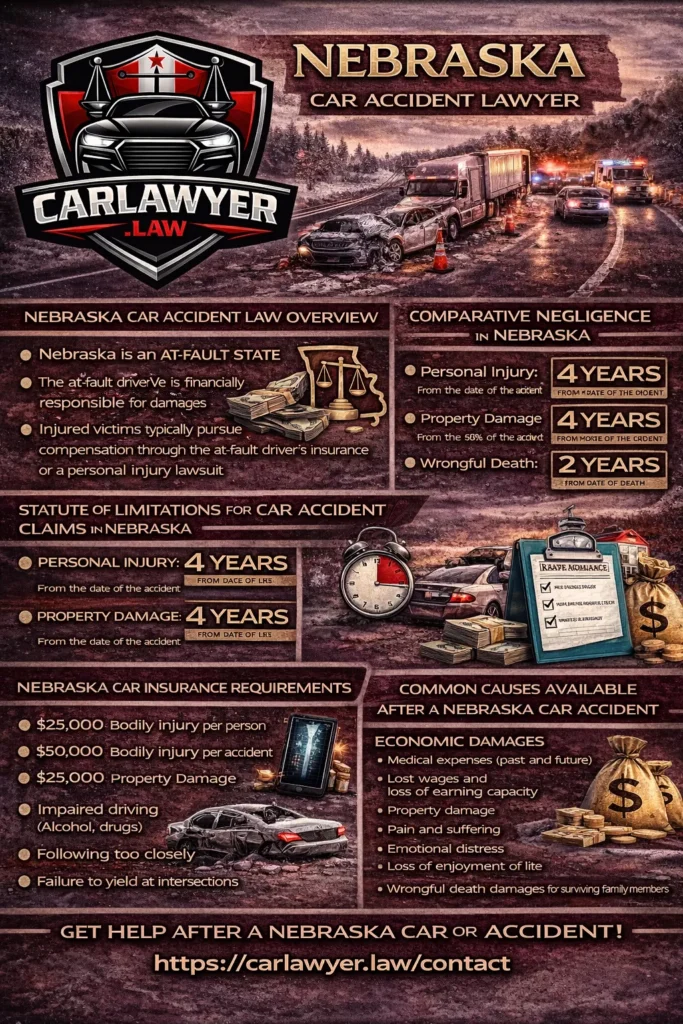
Nebraska is an at-fault state for car accidents. This means the driver who caused the accident is financially responsible for the damages suffered by others. Injured victims typically pursue compensation through the at-fault driver’s insurance company, and if necessary, through a personal injury lawsuit.
Unlike no-fault states, Nebraska allows injured drivers and passengers to seek compensation for medical bills, lost wages, pain and suffering, and other damages directly from the negligent party.
Nebraska follows a modified comparative negligence system with a 50% bar rule. Under this law:
Insurance companies often use comparative negligence rules to reduce payouts, making it essential to have strong evidence and legal representation after a crash.
Nebraska law strictly limits how long you have to file a lawsuit after a car accident. Missing these deadlines can permanently eliminate your right to compensation.
While four years may seem like plenty of time, evidence can disappear quickly. Speaking with a car accident lawyer early helps protect your claim and preserve critical proof.

All drivers in Nebraska are required to carry minimum liability insurance coverage. The current minimum limits are:
Drivers must also carry uninsured and underinsured motorist coverage unless they formally reject it in writing. This coverage can be crucial if you are hit by a driver who lacks adequate insurance.
Car accidents in Nebraska frequently occur on major highways and busy commuter roads, including:
Urban areas such as Omaha, Lincoln, and Grand Island also experience high accident rates due to congestion, distracted driving, and intersections with heavy traffic flow.

Most car accidents in Nebraska are preventable and caused by driver negligence. Common causes include:
Proving the cause of a crash is essential to establishing fault and recovering compensation.
Car accidents can result in a wide range of injuries, from minor to catastrophic. Common injuries include:
Even injuries that appear minor at first can worsen over time, underscoring the importance of immediate medical evaluation after any crash.
Victims of car accidents in Nebraska may be entitled to both economic and non-economic damages, including:
The value of a claim depends on injury severity, long-term impact, and the degree of fault assigned to each party.
Insurance adjusters often attempt to settle claims quickly and for less than their true value. They may ask for recorded statements or suggest you were partially at fault. You are not required to accept the first settlement offer, and doing so could prevent you from pursuing full compensation later.
Consulting a car accident lawyer before speaking extensively with insurers can help protect your rights and your claim.

Nebraska car accident cases can involve complex legal issues, including comparative negligence disputes, insurance coverage questions, and long-term injury valuations. An experienced car accident attorney can:
If you or a loved one has been injured in a Nebraska car accident, you do not have to navigate the legal process alone. Protect your rights and explore your legal options today by completing our free case evaluation form.