Car accidents in North Carolina can leave victims facing serious injuries, mounting medical bills, and uncertainty about their legal rights. Understanding North Carolina’s car accident laws, liability rules, and deadlines is critical to protecting your ability to recover compensation. That’s why you need a North Carolina car accident lawyer to help you get the compensation that you deserve.
Below is a comprehensive, state-specific guide for car accident victims in North Carolina.

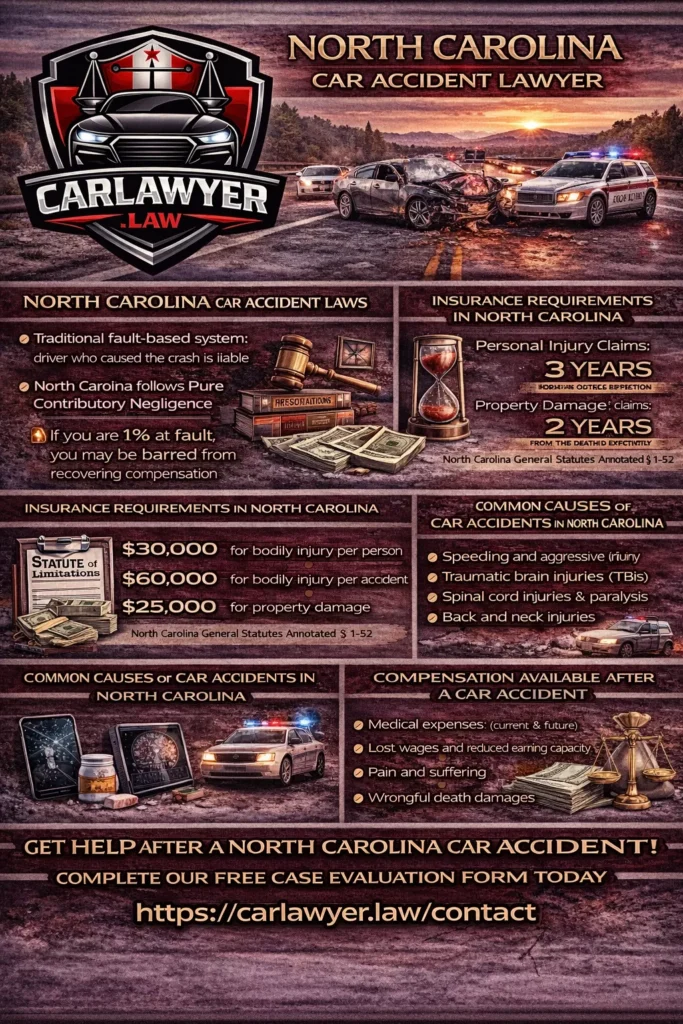
North Carolina follows traditional fault-based car accident laws, meaning the driver who caused the crash is financially responsible for the resulting damages. Accident victims typically pursue compensation through the at-fault driver’s insurance company or by filing a personal injury lawsuit.
North Carolina is one of the few states that still follows pure contributory negligence. Under this rule, if you are found even 1% at fault for the accident, you may be barred from recovering compensation. Because insurance companies often use this rule to deny claims, having strong evidence and legal representation is especially important.

Strict deadlines apply to car accident claims in North Carolina:
If a lawsuit is not filed within the applicable statute of limitations, the court will likely dismiss the case, permanently preventing recovery. Acting quickly helps preserve evidence and protects your legal rights.
North Carolina drivers are required to carry minimum liability insurance, including:
Uninsured and underinsured motorist coverage is also required unless properly rejected in writing. These coverages may apply if the at-fault driver lacks sufficient insurance.

Car accidents across North Carolina highways and local roads are often caused by:
Identifying the true cause of the crash is essential in contributory negligence cases.
Car accidents can result in a wide range of injuries, from minor to life-altering, including:
Some injuries may not appear immediately, making prompt medical evaluation critical.
If you can establish that the other driver was fully at fault, you may be entitled to compensation for:
Because contributory negligence can completely bar recovery, detailed documentation and legal strategy are essential.

These factors make North Carolina car accident cases especially complex.
If you were injured in a car accident in North Carolina, time and evidence matter. Taking early action can make the difference between a successful claim and a denied one.
Complete our free case evaluation form today to learn how we can help you protect your rights and pursue the compensation you deserve.