Colorado Car Accident Lawyer

Car accidents in Colorado occur on everything from congested Denver highways to steep mountain passes and rural two-lane roads. Weather changes, elevation, heavy trucking traffic, and tourism all contribute to serious crashes throughout the state. If you were injured in an accident, understanding Colorado car accident laws, filing deadlines, and how fault is determined is essential to protecting your right to compensation.

Car accidents in Colorado occur on everything from congested Denver highways to steep mountain passes and rural two-lane roads. Weather changes, elevation, heavy trucking traffic, and tourism all contribute to serious crashes throughout the state. If you were injured in an accident, understanding Colorado car accident laws, filing deadlines, and how fault is determined is essential to protecting your right to compensation – that’s why you need a Colorado car accident lawyer.

At CarLawyer.Law, we focus exclusively on representing car accident victims. This page explains Colorado’s accident laws, statutes of limitations, major trucking corridors, common injuries, and the compensation available after a crash.


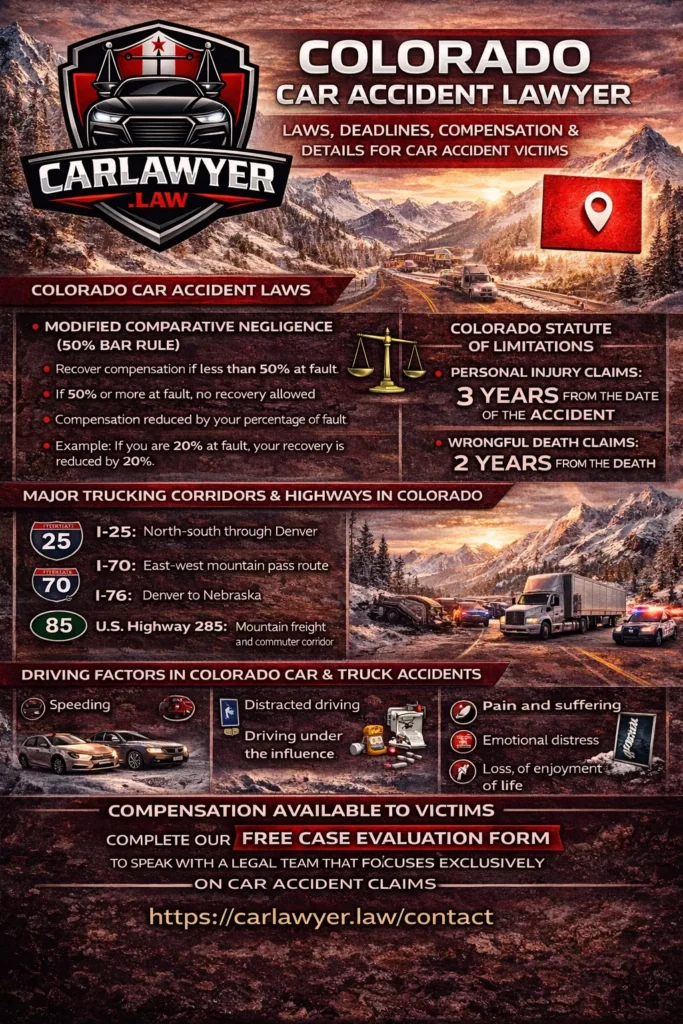
Infographic for CarLawyer.Law titled “Colorado Car Accident Lawyer” featuring the CarLawyer.Law logo and a mountainous Colorado highway background. The infographic explains Colorado car accident laws, including the modified comparative negligence 50% bar rule and the at-fault insurance system, the statute of limitations of three years for personal injury claims and two years for wrongful death claims, major trucking corridors such as I-25, I-70, I-76, and U.S. Highway 285, common causes of car and truck accidents in mountain and winter driving conditions, types of serious injuries, compensation available to accident victims, and a call to action to complete a free case evaluation form at CarLawyer.Law.

Colorado Car Accident Laws

Colorado follows a fault-based system with a modified comparative negligence rule that directly affects whether an injured victim can recover compensation.

Modified Comparative Negligence (50% Bar Rule)

Colorado uses a modified comparative negligence system, which means:

  • You can recover compensation if you are less than 50% at fault
  • If you are 50% or more at fault, you are barred from recovery
  • Your compensation is reduced by your percentage of fault

Example: If you are 20% at fault, your total compensation is reduced by 20%.

Because fault allocation is critical, insurance companies often aggressively dispute liability in Colorado accident claims.

At-Fault Insurance System

Colorado is an at-fault state, meaning:

  • The at-fault driver is responsible for damages
  • Claims are filed against the negligent driver’s insurance
  • Lawsuits may be required if coverage is denied or insufficient

Colorado Statute of Limitations for Car Accidents

Colorado law sets strict deadlines for filing car accident claims:

  • Personal injury claims: 3 years from the date of the accident
  • Wrongful death claims: 2 years from the date of death

Failing to file within these time limits can permanently eliminate your right to compensation.


Major Trucking Corridors & Highways in Colorado

Colorado is a major transportation hub for freight moving through the Rocky Mountain region. Commercial truck traffic is especially heavy on interstate highways connecting the Midwest to the West.

Key trucking corridors include:

  • Interstate 25 (I-25): Runs north–south through Denver, Colorado Springs, and Fort Collins
  • Interstate 70 (I-70): Major east–west trucking route through mountain passes
  • Interstate 76 (I-76): Connects Denver to Nebraska
  • U.S. Highway 285: Heavy freight and commuter traffic

Truck accidents on Colorado highways often result in severe injuries due to steep grades, weather conditions, and high speeds.


What’s Unique About Car & Truck Accidents in Colorado

Colorado car accident cases often involve unique risk factors, including:

  • Sudden weather changes and snowstorms
  • High-altitude driving conditions
  • Mountain passes with steep inclines and sharp curves
  • Tourism-related traffic from out-of-state drivers
  • Increased rollover accidents involving trucks and SUVs

These factors frequently complicate accident investigations and liability determinations.


Common Causes of Car Accidents in Colorado

Car accidents in Colorado are commonly caused by:

Weather-related crashes are a significant contributor to serious injuries throughout the state.


Common Car Accident Injuries

Because of high speeds and challenging terrain, Colorado car accidents often result in serious injuries, including:

Many injuries require extensive medical treatment and long-term rehabilitation.


Compensation Available to Colorado Car Accident Victims

Depending on the circumstances of the crash, injured victims may recover compensation for:

Economic Damages

Non-Economic Damages

  • Pain and suffering
  • Emotional distress
  • Loss of enjoyment of life
  • Permanent disability or disfigurement

Wrongful Death Damages

  • Funeral and burial expenses
  • Loss of financial support
  • Loss of companionship

Colorado places caps on certain non-economic damages, making accurate claim evaluation especially important.


Why Colorado Car Accident Claims Are Often Challenging

Insurance companies frequently:

  • Argue comparative fault to reduce payouts
  • Dispute injury severity
  • Minimize long-term medical needs
  • Delay claims to pressure settlements

When commercial trucks are involved, multiple insurance policies and corporate defenses often apply.


Why Legal Representation Matters After a Colorado Car Accident

Without legal guidance, accident victims risk:

  • Being unfairly assigned fault
  • Accepting inadequate settlements
  • Missing critical deadlines
  • Underestimating future medical costs

A lawyer familiar with Colorado car accident laws and insurance strategies can protect your rights and pursue the full compensation you deserve.


Get Help After a Colorado Car Accident

If you or a loved one has been injured in a Colorado car accident, do not wait to take action. Evidence can disappear quickly, and insurance companies move fast to protect their bottom line.

Complete our free case evaluation form today to speak with a legal team that focuses exclusively on car accident cases.


Authoritative Sources & References

  1. Colorado Revised Statutes – Civil Liability & Personal Injury Law
    https://law.justia.com/codes/colorado/
  2. Colorado Department of Transportation (CDOT)
    https://www.codot.gov/
  3. National Highway Traffic Safety Administration – Colorado Crash Data
    https://www.nhtsa.gov/road-safety/colorado